Opinions & Ideas

Author: John Bruton Page 1 of 70

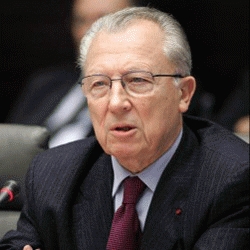
JACQUES DELORS

Jacques Delors was one of the most outstanding Europeans of the last century. He devoted his life to building, in the European Union, a structure of peace in Europe. The peace that he sought was based on mutual dependence rather than mutual rivalry.

He was committed to a Europe with a social dimension to accompany its economic efficiency. It was my privilege to get to know him well during my time as Minister for Finance.

A DARK DECADE IN EUROPEAN HISTORY….LESSONS FOR TODAY

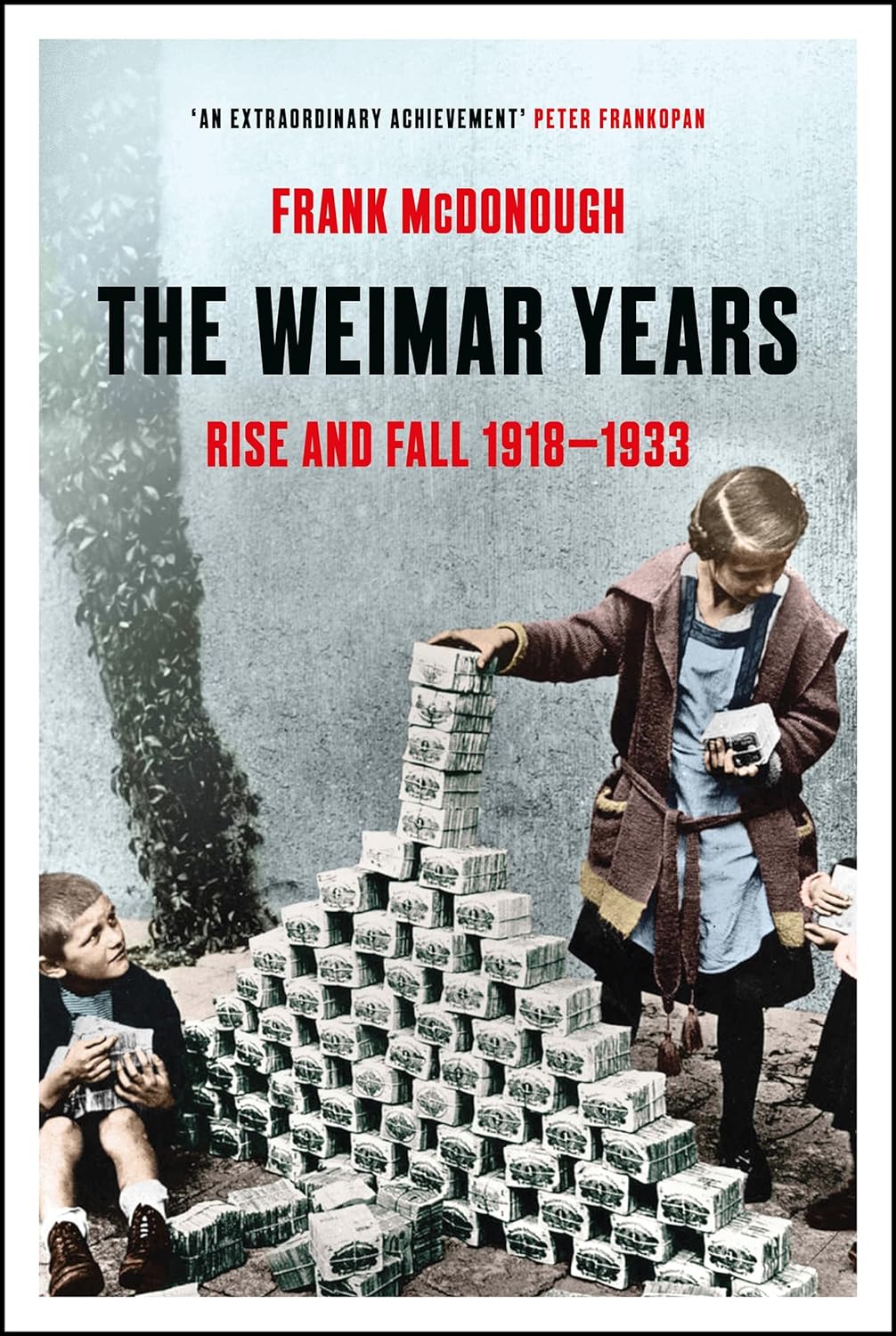
Last week, I published here a short review of aspects of Frank McDonough’s book “The Weimar Years”, a political history of Germany between 1919 and 1931.

It focussed on the factors that enabled the Nazis, with the aid of other authoritarian inclined political parties, to overthrow democracy. These other parties were closely associated with the army and/ or were highly nationalistic. Alfred Hugenberg  and Franz Von Papen were a principal leaders of this group. They thought they could control Hitler. So too German President of the time, Marshall Von Hindenbuzrg.

When the Reichstag was burned by a lone arsonist in 1933, Hitler seized the moment t abolished the last remnants of German democracy.

Dr Joseph Goebbels had created the public mood that would accept this.  He used technique, that we should watch out for , among the arsonist far right in Ireland and elsewhere in Europe. Goebbels technique was to find something that people already hated, and encourage them to hate it even more. The “big lie” is a variant of this technique. It played to people’s emotions, rather than  to their reason.

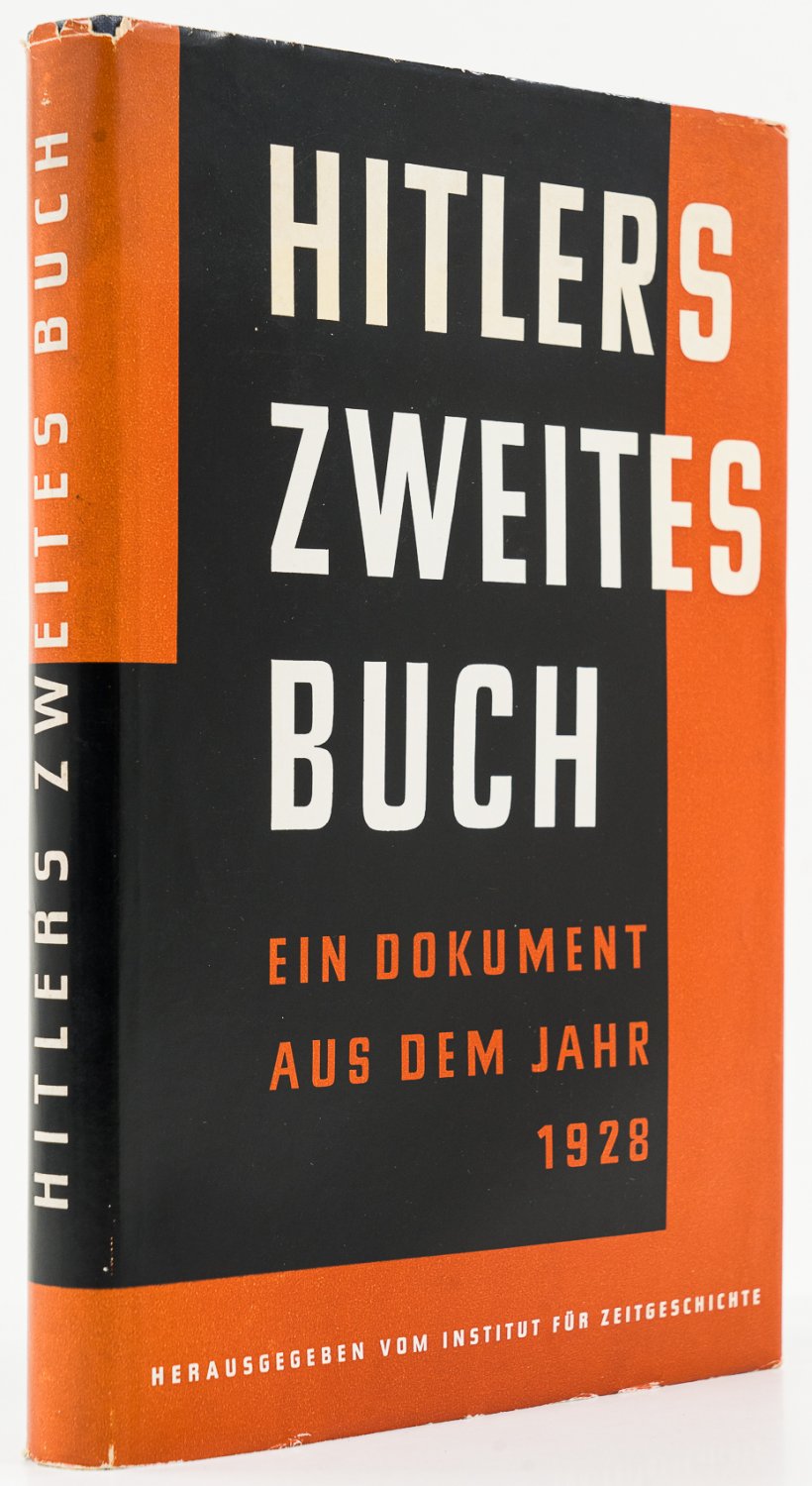
One other thing that interested me in McDonough’s book was the long term foreign policy that Hitler had prepared as a Second Book  (Zweites Buch)  in summer of  1928. This sequel to Mein Kampfh was not  published as the time, and did not appeat in English until 1961.

One wonders  if Vladamir Putin has a “second essay”, a sequel to the  long historical essay he published on the eve of his so far unsuccessful invasion of Ukraine.

Putin could not mount no Blitzkreig, but his interntions are no less malign than Hitlers’!

Hitler’s “Zweites Buch” laid out a four stage process

Stage ONE envisaged massive German Rearmament, the revision of the Versailles Treaty, and the formation of military alliances with the UK and Mussolini

Stage TWO envisaged German wars against France, Poland, Romania and Czechoslovakia

Stage THREE would consist of the destruction of the Soviet Union

Stage FOUR was  a planned war against the United States.

We know , with hindsight, that important parts of Hitlers plan did not work out. But the fact that a relatively unsuccessful opposition politician, as Hitler was  in 1928, could think in such ambitious terms, is a warning from history.

Stage ONE involved an alliance with the UK. Hitler thought the English and the Germans were racially close as many English people did at the time. But a sceptical democracy was too well implanted in Britain , for an alliance with a loud mouthed German dictator ever to have taken off. But Hitler continued to dream of an alliance with the UK even after the war had started.

A military alliance with Italy in the 1930’s would have been a liability for Germany. This was demonstrated when the war actually started, and Germany had to rescue Italy many times. The reasons for the degree of Italian military weakness are hard to understand.

The 1930s were a dark decade for Europe. I fear we are entering a similarly dark decade now. We need to study what  happened in the 1930s, if we are to avoid the mistakes made then.

HOW DEMOCRACY DISAPPEARED

“The Weimar Years”, a year by year history of Germany from 1919 to 1933, by Frank McDonough, published last month, could not be more timely.

It describes the fall of a democracy, in one of the most sophisticated societies in the world, and its replacement by a violently authoritarian regime built around one man, Adolf Hitler.

Hitler said he intended to come to power by legal means, but he stated openly , before  he came to power, that he would not shrink from the use of illegal methods to hold onto power.

He said 

“When our party emerges victorious by legal means, a new Supreme Court will replace this one, and the criminals of November 1918 will  find their reward . Then heads will roll”.

This language is not dissimilar to the “retribution” being promised now by Donald Trump.

The so called “criminals of November 1918”, referred to by Hitler, were the democratically elected German politicians who signed the Treaty of Versailles, ending the state of war that had existed between Germany and the Allies.

A completely unrealistic view of the balance of power obtaining in November 1918 was lodged in German public opinion. Germany had been , comprehensively, militarily, and economically defeated by then. But the High Command, led by Field Marshalls Von Hindenburg and Ludendorff, persuaded the public that it was the politicians who wanted to give up , and that the soldiers were able and willing to continue.

The second part was simply not true.  German military capacity was exhausted.

It would have been better if the allies had insisted on unconditional surrender and full occupation as in 1945.

The inter war democratic politicians in Germany were talented leaders who, in other circumstances, could have been very successful. Stresemann and Erzberger stood out.

Improvements were made in unemployment insurance. But paralysis in parliament, and hate filled rhetoric, meant that the President had to pass  key legislation by Presidential decree.

German inter war democracy faced major challenges over reparations to the allies. These led to paralysis,  and that  necessitated  rule by decree , which  slid into dictatorship.

It is not impossible that similar paralysis might evolve from the divisive debates that we will soon face over the related costs of ageing societies (pension inequalities, immigration,  healthcare costs etc.)

SHANE MCGOWAN RIP

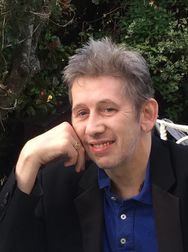
Watching Shane McGowans funeral Mass in Nenagh was, for me, one of the most moving experiences of recent times.

I did not know Shane, and encountered him only once, several years ago when he was making his way, painfully but persistently, down the aisle of an Aer Lingus flight, to his seat in the rear half of the plane. He was accompanied by his wife, who helped him , without diminishing his independence. Like millions of other people, I am a fan of his music, especially the poetry in his lyrics.

The aspect of Shane’s funeral that moved me the most was the lovely tribute paid to him by his wife, Victoria Mary Clarke. She emphasised the depth of Shane’s Catholic faith, as well as his deep respect for, and knowledge of, other faiths and philosophies. This faith brought him strength, perspective, and calmness in facing his own death.

Victoria stressed Shane’s belief in forgiveness, the centrepiece of our Christian faith. This message is critically important today when so many ostensibly unforgiveable things are being done, ranging from domestic abuse to crimes against humanity. Forgiveness must of course be accompanied by accountability, and finding a good way to do that will be both difficult and essential.

LOUIS J BELTON RIP

I am deeply saddened to learn of the death of my old friend, louis j Belton.

Coming from a family that has members in the Oireachtas almost since the foundation of the state, louis brought his own distinctive style to politics.

His contributions at meetings of the Fine Gael parliamentary party were particularly noteworthy. He mixed self-deprecation humour, with the fruits of serious reflection on the political issues of the day.

He was a formidable grassroots campaigner. One of my happiest political memories is of campaigning with him in Ardagh, in the 1992 general election, when, against the national trend, Lois regained his seat.

I extend heartfelt sympathy to all the Belton family, and to the people of Longford on their great loss.

TONY CONNELLY ON THE MIDDLE EAST CONFLICT

I am reprinting below a brilliant article published by Tony Connelly on the RTE website.

It deserves to read and read over again.  It brings out how difficult it will to resolve the present conflict. As he did on Brexit, Tony  sets out the history fairly, and gets to the heart of the problem.  The work Tony does is a powerful argument for public service broadcasting.

I am putting a few comments of my own on the issue before the full text of Tony’s article. When I was EU Ambassador in Washington from 2004 to 2009, I met as many as I could of the Think Tanks focussed on the Middle East. Serious efforts were being made to resolve the issue at that time. But, in private, the prevailing stance was one of passive pessimism.

IRISH ATTITUDES

Like everyone else, I have been thinking and worrying about the atrocious war that is going on in Gaza following the attack by Hamas on innocent civilians in Southern  Israel. 

It is difficult to say anything useful about a solution to the present situation without first having studied the history of the area going back at least as far as the Balfour Declaration on 1917. But history can also become a resource from which one can draw,   to feed one’s own prejudices. 

Irish nationalists of all hues tend to sympathise with the Palestinians. This is because a shared feeling of having been dispossessed . This happened to Palestinians in the first half of the  20th century. Something similar happened to Irish Catholics in the Seventeenth Century.. Both  jobs were done by a combination of military conquest and  legal artifices. 

Less convincingly, Anti British feeling also influences Irish Nationalist feeling on the issue , because the British are accused of favouring Jewish  over Palestinian interests in the inter war period.In fact, by the late 1930s the British leant more towards the Palestinian side.

ASK HARD QUESTION OF ONES OWN SIDE

Identity politics is also playing a part. 

People can wave their personal flag as being “pro Palestinian rights” or “pro Israel”. Once having comfortably taken a side, they often  absolve themselves from thinking about what might solve the problem, a more fifficult exercise because it would involve making or supporting concessions by ones own  “side”.

I would ask pro Israeli demonstrators the question 

    “What do you think Israel should do to give Palestinians  peace , security and freedom?”

I would ask pro Palestinian demonstrators a similar question

    “What do you think Palestinians should do to offer Israeli Jews peace, security and freedom?”

These are hard questions. But they are not trick questions. It is only by thinking oneself into the mind of one’s adversary that one can turn an adversary into a partner.  

There is an added difficulty in this case. That is that Israel wants to be a Jewish State. Palestinians, on the other hand, would accept a secular state, or an Arab state.  

A one state solution would be difficult for Israel to accept because Jews might not be a majority within such a state. There would have to be very robust minority protections in any one state system and these could prove to be difficult to enforce, in the wake of recent atrocities.

RTE.IE

DAVID SWEETMAN RIP

LEADING FIGURE IN THE RESTORATION OF TRIM CASTLE

I wish to pay tribute to the life and work, of David Sweetman, retired Chief Archaeologist in the Office of Public Works. He was a native of County Meath, and has died recently. David specialised in medieval castles.

Meath was a hotly contested territory from the 12th to the 17th centuries, so many land owners and felt the to necessity to fortify their homes and farm buildings protect their lives and  their livestock.

David had a natural enthusiasm for the specialist subject, fortified castles and outbuilding, of which his native county of Meath was, and is, richly endowed.

David was a leading figure in the restoration of Trim Castle, which is of huge economic benefit to Meath tourism, and to the branding of “Ireland’s Ancient East”.

He  understood both urban and rural archaeology. He wrote about the medieval town of Drogheda and about field boundaries, focussing on rural Clonard.

David comes from one of Meath’s distinguished families and his writing is of lasting value. I extend heartfelt sympathy to his wife Roseanne and their children.

GAZA

WHAT IS JUSTICE?

There is a tendency, in the media reporting of crimes, to mix up retribution with justice. 

In my view, the punishment of the crime should be designed to deter or prevent, future crime .It should never  be designed to fulfil an emotional wish for retribution or revenge.

These considerations should apply to crimes committed against peoples and nations, as well as individuals. 

States have a responsibility to defend themselves, and to help build a credible international order that will deter future crimes against peoples and states. Revenge and retribution should never motivate state action.

Hamas has made a callous calculation. They reckoned that the  Israeli response would be so severe that it would strengthen Hamas’ position in Arab public opinion. 

Unfortunately, Israel looks as if it is playing the role Hamas cast for them. 

Is there another way to build peace ?

We need to find a practical compromise between Israelis and Palestinians. This will require rigorous thought. Slogans will not suffice.

TWO REQUIREMENTS FOR A TWO STATE SOLUTION

The international community advocates a “two state “ solution. 

It is far too easy to advocate  a two states “solution” without thinking through the practical details. The devil will be in the detail.. 

“Two States” will not be  a formula for  peace, unless

  1. the proposed boundaries between the  two states are delineated,  and
  2.  there is a clear statement of the obligation each state will have towards the other, and the means whereby  these obligations might be enforced.

These  two issues should be put the every advocate of a two state “solution” by media interviewers. 

The answer given may not be definitive , but we would then be moving the debate away from evasive cliches, and towards difficult practical issues that cannot be avoided in the real world.

If a two state solution cannot be found, we will be left with three  even more difficult options…..

   a one state solution, 

   perpetual war, or 

   complete defeat of one side or the other.

PUNISHMENT SHOOTINGS TREBLE

According to figures released by the Police Service of Northern Ireland (PSNI) , the number of people subjected to punishment shootings in Northern Ireland almost tripled in the past year.

These attacks were perpetrated in both Loyalist and Republican areas. It is probable that the identity of the perpetrators is widely known, including by the victims.

These victims have undergone acutely painful and life diminishing injuries. But it is probable that neither they, nor anyone else, will come forward to give evidence in court and help eliminate this scourge.

Basically, people are not taking responsibility as citizens. There can be no “New Ireland” as long as this continues

THE IRISH CIVIL WAR …

WERE THERE TWO CIVIL WARS OR JUST ONE?

I have just finished reading the “Civil War in Dublin” by John Dorney. Dorney describes himself as an independent historian.

I have a minor quibble with the title of the book, which refers to “THE” Civil War, suggesting that there was only one Civil War.

I would argue that there were in fact two Irish civil wars……the first one from 1919 to 1921, and the second one from 1922 to 1923.

I would argue that the 1919 to 1921 War, the War of Independence, was also an Irish civil war.  I say this because Irish people fought on both sides in both wars.  In fact, I believe most of the people who died on both sides were also in fact Irish.

The members of RIC, who opposed the IRA, were predominantly Irish (and Catholic too if that matters). Failing to recognise the Irishness of the many natives of this 32 county island, who fought on pro Union side in the War of Independence, is a barrier to reconciliation of all the communities on this island.

If one looks up the excellent book “The Dead of the Irish Revolution” by O Halpin and O Corrain, covering the period 1916 to 1921, one can confirm that those killed by the IRA were predominantly Irish, such as magistrates, RIC members and supposed informers. Some of these people were Protestants, and wanted Ireland to remain part of the UK, but THIS does not makes them any less Irish!

The fact that Irish people fought on both sides in the 1919/1921 war, makes it an Irish civil war.

Those killed in the first military action of the War of Independence in January 1919,  were members of the RIC, James McDonnell from Belmullet, Patrick O Connell from Coachford Co Cork,  and both were Irish Catholics.

The first magistrate to be killed, Jack Milling from Glasson Co Westmeath, as an Irish Protestant. He was shot through the front window of his house on the Newport Road in Westport Co Mayo, when he was winding up the clock. In his front room. His family subsequently settled in Armagh.

I make these points, not as a criticism of John Dorney’s book, but as a reminder that if we want reconciliation on this island, we must recognise those born on this island, who profess allegiance to King Charles, who feel British, also have an Irish birthright, and are fully Irish. Some will find it difficult to come to terms with this, but it will have to be done.

The political vandals, who opposed the idea of recalling by name, on a wall in Glasnevin cemetery the people  who died on BOTH sides in the 1919/21 war, were promoting a version of what it is to be Irish, that is deeply exclusionary.  They were saying that , if you supported a continuing link with Britain during the  1919/21 War, you were not Irish and did not deserve to be  remembered by name on a wall. They were telling the Irish people , who fought on the other side,  that they and their beliefs were to be cancelled (to use the modern term.) If this attitude persists we will never have lasting peace  or reconciliation  on this island

We need a fair minded presentation of painful historic events, that forces people to reflect on their own prejudices. John Dorney does that in regard to what I will call the Second Irish Civil War, from 1922 to 1923.

 John Dorney is a graduate in history and politics from UCD and is a native of Rathfarnham. He manages a website on Irish history called “The Irish Story”.

The interim period between the Truce of 11 July 1921 and the opening of the Civil War almost a year later, was one during which there was no clear and well-established authority in the state.  People took the law into their own hands. Order had broken down and, without order, laws cannot be enforced. The longer that continued, the more respect for laws would be eroded.

Something had to be done to restore unitary authority across the full territory of the state. To my mind, the civil war was fought to restore order and thereby make laws meaningful.

What led to this situation?

A peace Treaty had been signed between the UK government and an Irish Delegation, led by Arthur Griffith, representing Dail Eireann in December 1921. This Treaty was approved by a majority in Dail Eireann on 7 January 1922.  

That should have settled matters. But a large part of the IRA membership did not accept the decision of Dail Eireann to accept the Treaty.

The biggest objection to the Treaty was that it required TDs to swear an oath of

  “allegiance to the constitution of the Irish Free State” (which was established under the Treaty.)  and to be “faithful to King George and his successors.”

It seems to me that the wording here creates the stronger tie to Ireland and its constitution, than does the “faithfulness” to King George. In any event, it was not worth falling out over.

We know now, with the benefit hindsight, that the Treaty was capable of being amended (as are all treaties), and that capable of being a steppingstone to greater independence, as Michael Collins said at the time.

As the argument raged in the early months of 1922 over the wording of the Treaty, the IRA broke down into two factions, and each scrambled to occupy key installations in the capital and around the country. Attempts to heal the split failed.

Generally speaking, the anti Treaty side seized installations in the southern half of the country, and the National Army took control elsewhere.

 In Dublin, Anti Treaty forces, led by Rory O Connor, occupied the Four Courts and made it their headquarters. They also seized the Kildare Street Club, of which many Anglo Irish gentry were members, and the hall where the Orange Order used to meet in Dublin.

One has the sense that these buildings were chosen for their propaganda or symbolic value, rather than for their military defensibility. Indeed a preoccupation with symbolism underlaid the problems of Anti Treaty political thinking.

As said earlier, the majority of the IRA opposed the Treaty. This was the case in Dublin too. Only 1900 of the 4400 IRA members in Dublin were pro Treaty.

Yet when the fighting started , the National Army were able to dislodge the anti Treaty from their strongholds in Dublin quite quickly. The Four Courts was taken with the aid of artillery.  The buildings, held by anti Treaty forces in the vicinity of O Connell Street, were taken in a few days of, building to building fighting, not unlike the fighting in Stalingrad 20 years later.

Why was the war in Dublin over so quickly, but dragged in the rest of the country for 10 months?

The National Army may have been outnumbered at the outset of the war, but they were better equipped, with material supplied by the British. They also had much more support from the general public, which meant they had better intelligence.

They were better led too. The Free State government had a clear sense of purpose, that of establishing the institutions of a new European state.

The  anti Treaty side were, both militarily and mentally, on the defensive from the beginning, holding positions and waiting to be attacked, rather than advancing to take positions held by the Free State.

The Military wing of the anti Treaty formation, led by Liam Lynch, made the key decisions and the civilian leadership of Eamon de Valera was almost completely sidelined. They were also fighting to defend something ephemeral, a Republic proclaimed at the GPO in 1916, which had no government, no visible or tangible existence. It was an idea, not a reality.

In contrast, the Free State was established the basis that civilian leadership was paramount over the Army.

When Michael Collins took over as Chief of Staff of the Army, he handed over his position as President of the Executive Council to WT Cosgrave. Even when Michael Collins himself was killed in action in August 1922, there was a seamless transition of responsibilities.

Soon, as a result of intensive recruitment, the National Army would have a huge numerical advantage over the Anti Treaty side.

Why was the Free State able to recruit so many troops, so quickly?

Only a small proportion of the population had been involved in War of Independence, and not everybody had voted for Sinn Fein in the 1918 Election. This left a large pool from which soldiers could be recruited by the National Army. The National Army was also able to recruit among those that were unemployed, including those who had fought in the Great War.

This was a brutal and cruel civil war. The anti Treaty forces wanted to bankrupt the Free State by blowing up its infrastructure. One such plan was to blow up all the road and rail bridges leading to and from Dublin. This was a failure and numerous  anti Treaty prisoners were taken.

This book gives an account of the execution without trial of anti Treaty soldiers. Some of these executions were part of a planned campaign to intimidate the opponents of the Treaty  and get them to give up their armed resistance to it. The policy on executions without trial may have shortened the civil war, but it undermined the case that the Free State was fighting. It was hard to justify and no one was held to account for it.

Other actions were undertaken , on an unauthorised basis , by groups within the National Army, who were out of control.

The worst case, in my mind, is the killing of Edwin Hughes, Brendan Holohan and John Rogers. These were unarmed teenagers caught distributing a leaflet in Drumcondra calling for the killing of Free State soldiers. The bodies  of these young boys were found the next day in a quarry near Clondalkin.

All urban centres had been secured for the Free State by the end of August, but the fighting continued on hit and run basis well unto 1923, using tactics refined in the war against the British between 1919 and 1921. Unarmed civilians were targeted by both sides.

 The Anti Treaty forces finally gave up in May 1923, and they dumped their arms.

Although this book is sub titled the Civil War in Dublin, it gives a fairly full account of developments outside Dublin.  It is a comprehensive piece of work and I recommend it.

I believe the civil war flowed from the War of Independence which in turn flowed from 1916 which was a response to the militarisation of politics by the Ulster Volunteers. Violence begets violence. It rarely serves any useful purpose.


Page 1 of 70

Powered by WordPress & Theme by Anders Norén